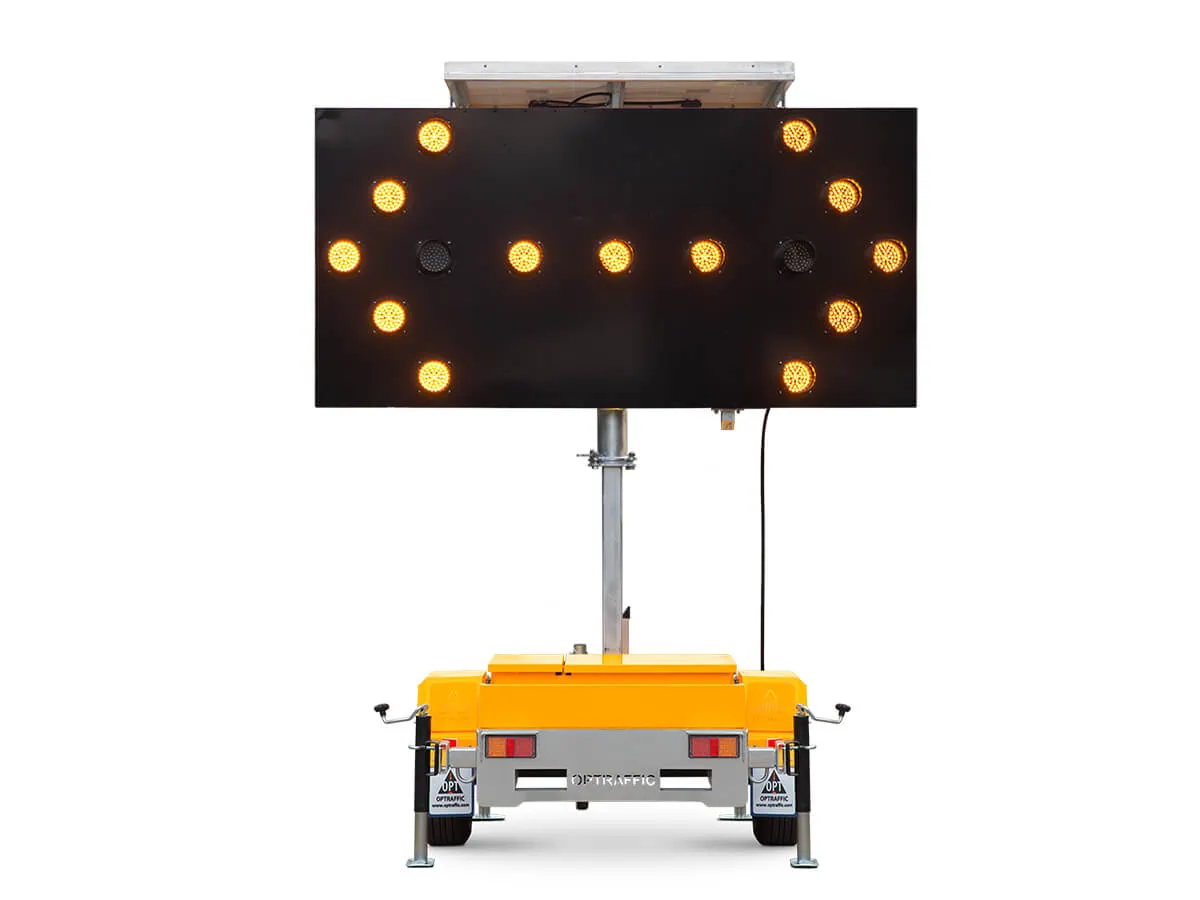
In the realm of road safety and traffic management, few tools are as indispensable as the traffic arrow board. These highly visible and easily understood devices play a critical role in directing traffic, managing road closures, and ensuring the safety of both motorists and construction workers. This article delves into the importance, functionality, and application of traffic arrow boards, highlighting their significance in maintaining order and safety on our roads.
What is a Traffic Arrow Board?
A traffic arrow board is an electronic sign used primarily in road construction and maintenance zones. It features a series of lights arranged to form arrows or other directional indicators, guiding motorists through detours, lane closures, and other temporary traffic configurations. These boards are typically mounted on trailers or trucks, making them mobile and easy to position as needed. For more information on traffic arrow boards and other traffic management solutions, visit optraffic.com.
Importance of Traffic Arrow Boards
- Enhanced Safety: Traffic arrow boards are vital for enhancing safety on roads. By providing clear, real-time information about road conditions ahead, they help prevent accidents and reduce confusion among drivers. This is especially important in construction zones, where unexpected changes in traffic patterns can pose significant risks.
- Efficient Traffic Flow: By directing traffic smoothly around obstacles, lane closures, or accidents, arrow boards help maintain a steady flow of vehicles. This reduces congestion and minimizes delays, benefiting both the general public and emergency services that rely on clear roads for rapid response.
- Worker Protection: For road construction and maintenance workers, traffic arrow boards offer an added layer of protection. They alert drivers to the presence of work zones well in advance, giving them ample time to slow down and navigate safely through these areas.
Key Features of Traffic Arrow Boards
- Visibility: Traffic arrow boards are designed to be highly visible, even from a distance and in various weather conditions. The bright LED lights used in these boards ensure that the arrows and messages are clear and easy to read, both during the day and at night.
- Mobility: Most traffic arrow boards are mounted on trailers or vehicles, allowing for easy transportation and quick deployment. This mobility is crucial for adapting to changing road conditions and ensuring that the boards can be positioned where they are needed most.
- Programmability: Modern traffic arrow boards are programmable, allowing operators to change the displayed message or arrow direction as needed. This flexibility is essential for managing dynamic traffic situations and providing accurate guidance to drivers.
- Durability: Built to withstand harsh environmental conditions, traffic arrow boards are typically weatherproof and rugged. This ensures they remain operational in extreme temperatures, heavy rain, and other challenging conditions.
Applications of Traffic Arrow Boards
- Road Construction and Maintenance: One of the primary uses of traffic arrow boards is in road construction and maintenance. They are used to guide traffic through detours, indicate lane closures, and provide warnings about upcoming work zones.
- Accident Management: In the event of an accident, traffic arrow boards can be quickly deployed to manage the flow of traffic around the scene. They help create safe zones for emergency responders and prevent secondary accidents caused by sudden traffic slowdowns.
- Special Events: Traffic arrow boards are also useful during special events, such as parades, festivals, or sporting events, where normal traffic patterns are temporarily altered. They help manage crowd flow and direct vehicles to parking areas or alternate routes.
- Utility Work: Utility companies often use traffic arrow boards during maintenance or repair work on power lines, water mains, or gas lines. These boards help protect workers and guide traffic around the work area safely.
Best Practices for Using Traffic Arrow Boards
- Strategic Placement: Proper placement of traffic arrow boards is crucial for effectiveness. They should be positioned well in advance of the work zone or traffic alteration to give drivers enough time to react and follow the directions.
- Regular Maintenance: To ensure reliability, traffic arrow boards require regular maintenance. This includes checking the lights, batteries, and overall structural integrity to prevent malfunctions that could lead to confusion or accidents.
- Clear Messaging: The messages and arrows displayed on traffic arrow boards should be clear, concise, and unambiguous. Avoid using overly complex or lengthy instructions that drivers might not have time to read and understand.
Conclusion
Traffic arrow boards are an essential component of modern traffic management and road safety. Their ability to provide clear, real-time guidance to drivers makes them invaluable in a variety of situations, from construction zones to emergency response scenarios. By understanding their importance, features, and best practices for use, we can appreciate the critical role these devices play in keeping our roads safe and efficient.